Productive Workspace: Design a Recharge Zone
In today’s fast-paced digital landscape, the boundary between “home” and “office” has increasingly become blurred. This shift often results in quicker burnout and diminished focus. As the traditional work-life dynamic evolves, the importance of creating dedicated recharge spaces has never been more crucial for maintaining productivity.
Recharge zones are not just a Silicon Valley luxury; they are essential for fostering sustained performance and well-being. This guide will explore how to transform your home office into a high-performance sanctuary. From ergonomic nap pods to sensory quiet zones, we will delve into the design elements that promote deep rest and mental clarity.
Get ready to optimize your workspace for peak productivity and well-being. Let’s embark on a journey to create an environment that respects your need for recovery and enhances your professional output.
affiliate link
The Science Behind Recharge Zones
Incorporating proactive rest into your workspace can significantly enhance productivity. According to a study by Gartner, there is no direct correlation between longer working hours and improved performance. Instead, companies that implement proactive rest policies experience a 26% increase in employee performance. “Proactive rest not only boosts productivity but also reduces burnout rates to just 2% compared to the average of 22%.”
The need for dedicated recharge zones is further emphasized by alarming statistics on burnout among remote workers. With 86% of full-time remote workers experiencing burnout, it’s clear that the traditional work environment needs a refresh. This demographic faces unique challenges, including difficulty disconnecting and increased pressure to remain available.
Finally, mental clarity is crucial for productivity and work performance. Engaging in self-care activities, such as exercise and mindfulness meditation, is proven to sharpen mental clarity. A conducive environment free from distractions fosters focus, allowing for deep work and effective task management. By prioritizing mental health, individuals can experience significant improvements in concentration and resilience.
Design Elements for a Recharge Zone
Acoustic Shielding for Noise Reduction
Implementing acoustic panels can dramatically improve your home office environment. These panels absorb excess sound waves, reducing echoes and reverberation, which enhances communication and focus. They also help in complying with noise regulations, particularly in multi-unit buildings, ensuring a peaceful workspace.
Ambient Lighting for Mood Enhancement
Lighting plays a crucial role in mood and productivity. According to Psychology Today, natural light boosts creativity and cognitive performance. Incorporate warm lighting for social tasks and cooler lighting for focus, mimicking natural light patterns to maintain circadian rhythms and optimize well-being.
Textiles That Promote Relaxation
Soft textiles, like wool blankets and linen sheets, have a calming effect on the nervous system. They signal safety, leading to reduced stress and enhanced relaxation. Integrating these materials can create a comforting, aesthetically pleasing sanctuary.
| Design Element | Materials/Setups | Benefits |
|---|---|---|
| Acoustic Panels | Wall-mounted, Ceiling-suspended | Noise reduction, Enhanced focus |
| Lighting | Warm vs. Cool, Circadian Systems | Mood enhancement, Improved productivity |
| Textiles | Cotton, Wool, Linen | Stress reduction, Emotional well-being |
Creating a Nap Pod
affiliate link
Integrating short naps into your workday can significantly boost productivity and cognitive function. According to a systematic review, daytime naps improve alertness, executive function, and memory, particularly when taken early in the afternoon. This boost in cognitive performance is consistent across various demographics, making naps a universally beneficial practice. While traditionally viewed negatively in Western cultures, napping is increasingly recognized as a valuable tool for enhancing work efficiency and well-being.
Ergonomic Support: Ensure proper body alignment to prevent discomfort and promote relaxation.
Adjustable Positioning: Allow incline or decline options for personalized comfort.
Noise Reduction: Use soundproofing materials or white noise options for a peaceful environment.
Lighting Control: Provide customizable lighting to cater to different preferences.
Soothing Sounds: Include nature sounds or soft music to enhance relaxation.
Timed Wake-Up Systems: Implement systems to ensure naps are of ideal length, avoiding grogginess.
When it comes to design inspiration, consider the EnergyPod by MetroNaps for its reclined seating and privacy visor, or the SLEEPBOX by Arch Group with its LED mood lighting and advanced features. These designs demonstrate how to create a nap pod that enhances both comfort and productivity.
Curating a Quiet Zone
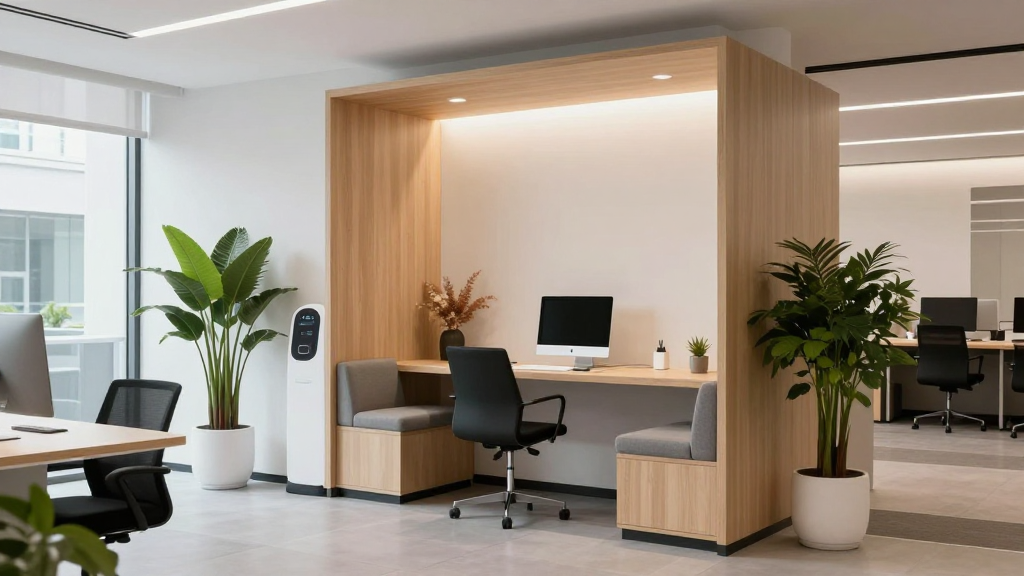
In a world buzzing with constant activity, crafting a quiet zone within your workspace offers a sanctuary of sensory tranquility. The calming influence of such spaces is paramount, reducing stress and fostering a deep sense of mental clarity. By minimizing distractions, these zones enhance not only focus but also overall productivity.
To foster an environment that promotes quietude, consider incorporating elements such as acoustic design techniques. Sound-absorbing materials, barriers to block external noise, and sound-masking technologies create a peaceful backdrop that allows for undisturbed concentration. These elements are essential in crafting an oasis of calm amidst the daily hustle.
“Quiet spaces are the unsung heroes of productivity,” emphasizes the necessity of tailored environments.
Personalization is key to a successful quiet zone. Understanding individual needs and incorporating diverse space configurations can transform a generic area into a personalized retreat. Allowing employees to choose from focus pods, meditation corners, or quiet libraries ensures that their unique preferences and work styles are met, boosting both satisfaction and efficiency. Such flexibility not only enhances well-being but also optimizes performance, crafting a workspace that truly supports your needs.
Maintaining Your Recharge Zone
affiliate link
Creating a recharge zone is just the beginning. Consistent maintenance ensures it remains an effective sanctuary for productivity and well-being. Regularly refreshing your space not only keeps it inviting but also adaptable to your changing needs.
Declutter Regularly: A tidy environment promotes mental clarity. Make decluttering a routine to prevent chaos from creeping in. This step reduces visual distractions and enhances focus.
Update Seasonally: Refresh your workspace with seasonal touches for a renewed ambiance. Consider incorporating seasonal accents like autumnal decor or changing wall colors for a cohesive look.
Implement Feedback Loops: Establish a system to gather and act on feedback about your workspace. Feedback loops allow for continuous improvement, ensuring your recharge zone evolves with your needs.
By integrating these practices, your recharge zone remains a dynamic space that supports sustained productivity. Embrace change and consistency to keep your workspace a source of inspiration and focus.
FAQs on Recharge Zones
Understanding and creating recharge zones can significantly enhance productivity. Here are some frequently asked questions to help you get started:
Q: What are some common misconceptions about recharge zones? A: Many people mistakenly believe recharge zones can be established anywhere. In truth, they require specific geological and soil conditions to function effectively, ensuring water infiltrates the ground properly.
Q: How can I create a recharge zone in a small home office? A: Start by designating a specific area separate from your main work zone. Opt for versatile furniture, like a small table or seating area that suits relaxation activities. Personalize with decor that promotes calmness, such as plants and soft lighting.
Q: What budget-friendly options are available for setting up a recharge zone? A: Utilize existing furniture creatively, such as repurposing a dining table as a desk. Embrace DIY projects, like crafting a wood top desk with affordable materials, and incorporate plants for both aesthetic and mood enhancement.
By addressing these questions, you can effectively transform your workspace into a recharge zone that supports both well-being and productivity.
Conclusion
https://fiscalfitnessflow.com/index.php/2026/02/03/somatic-healing-prioritize-body-wellness/
Transforming your workspace into a recharge zone can significantly boost productivity and well-being. By integrating design elements like acoustic shielding, ambient lighting, and ergonomic furniture, you create an environment conducive to relaxation and mental clarity. Whether through a budget-friendly approach or a well-curated quiet zone, these changes can make a profound impact.
It’s time to take action. Implement these strategies to harness the full potential of your workspace. Remember, investing in your productivity today will yield long-lasting benefits for your overall well-being. Start now, and watch your productivity soar to new heights.