Boost Productivity: AI Assistants for Business
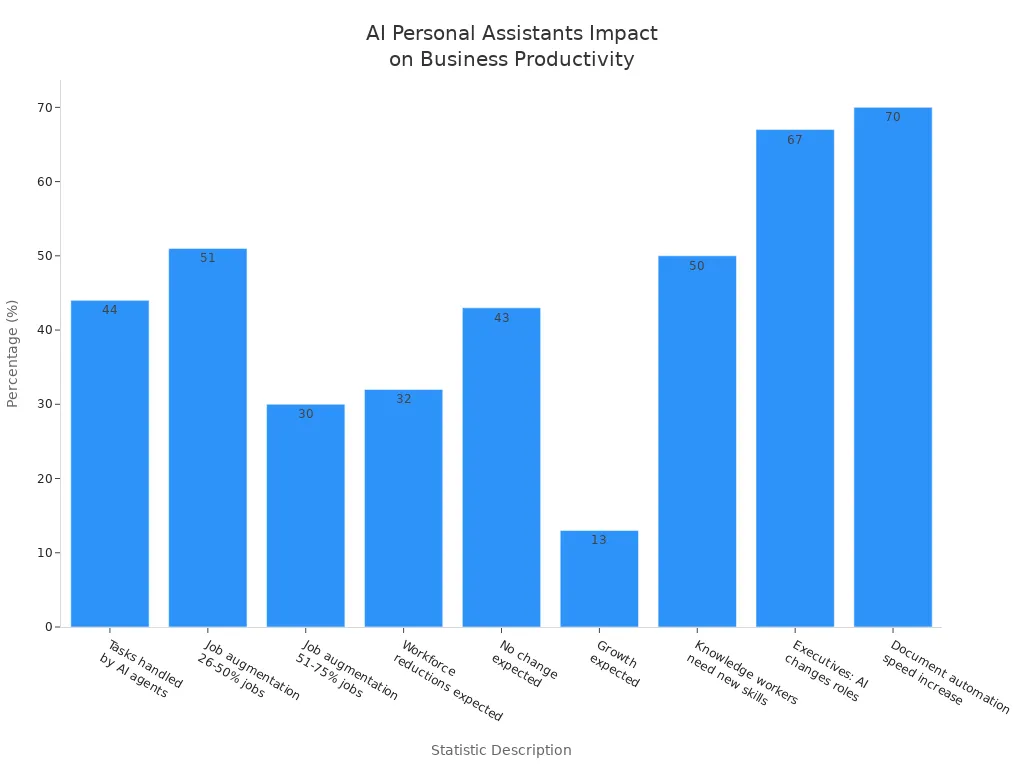
Businesses see big changes with AI personal assistants. They automate tasks, optimize workflows, and help teams make smarter decisions. In finance, these assistants speed up loan processing by 70%. The table below shows how ai boosts productivity across industries.
| Statistic Description | Value |
|---|---|
| Tasks handled by AI agents as a percentage of US work hours | 44% |
| Expected job augmentation by AI (26-50% of jobs) | 51% |
| AI-driven document automation speed increase in loan processing | 70% |
Key Takeaways
AI personal assistants automate routine tasks, allowing teams to focus on creative projects and strategic work.
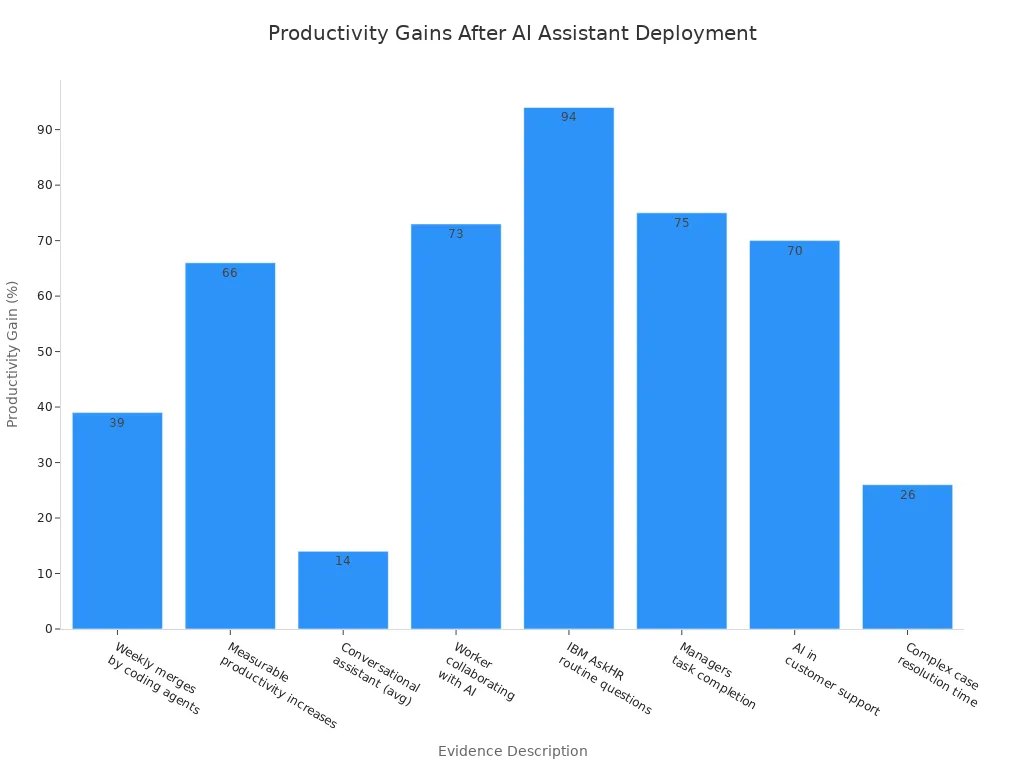
Businesses report productivity gains of 25-40% when using AI personal assistants, leading to faster task completion.
Implementing AI tools requires assessing business needs, ensuring system readiness, and providing employee training for successful adoption.
affiliate link
AI Personal Assistants: Features and Benefits

What Is an AI Personal Assistant
An ai personal assistant is a smart digital tool that helps people and teams manage daily work. Unlike traditional digital helpers, these assistants understand context and nuance. They analyze conversations and user behavior to deliver accurate responses. Ai personal assistants can handle multi-step workflows, such as sorting emails or assigning tasks, without needing constant direction. They connect with productivity tools, making it easy to work within a digital ecosystem. Ai virtual assistants also suggest actions and automate follow-ups, creating a seamless experience for users.
Key Features for Business Productivity
Ai personal assistants stand out because they use natural language processing. This technology lets them interpret and generate human language, which helps teams communicate better. Ai virtual assistants leverage large language models to create human-like text and respond to commands. They learn from interactions, so their performance improves over time. Key features include:
Task automation for repetitive jobs
System integration with calendars, emails, and project tools
Proactive reminders and follow-ups
Searching for information quickly across platforms
These features boost efficiency and support workplace automation.
Immediate Benefits for Teams
Teams using ai personal assistants notice big changes right away. Ai virtual assistants save time by handling digital busywork and surfacing important information. Workers complete tasks faster, often one-third quicker than before. Organizations report productivity gains of 25-40%. Ai personal assistants allow employees to focus on creative projects instead of routine tasks. This shift leads to higher efficiency and a stronger return on investment for businesses.
Business Applications of AI Personal Assistants

Automating Routine Tasks
AI personal assistants have become the backbone of workplace automation. They handle repetitive jobs that once took up hours of employee time. Teams now rely on ai virtual assistants to streamline daily operations and boost efficiency. Here are some of the most common routine tasks these smart tools automate:
Employee onboarding: They guide new hires through paperwork and training.
Digital transformation: They answer tech questions and help with new software.
Employee self-service: They give instant access to HR information and tools.
Operational efficiency: They automate report generation, approval workflows, and meeting scheduling.
Scheduling and calendar management: They prevent double bookings and set reminders, making managing your calendar effortless.
Email management: They draft replies and sort messages.
Task prioritization: They organize work by urgency and importance.
Data analysis and reporting: They quickly generate reports from spreadsheets.
AI personal assistants also help companies save time and reclaim your time for more strategic work. The table below shows how automation reduces operational costs and errors:
| Task Type | Benefits |
|---|---|
| Data Entry Automation | Reduces errors and increases efficiency by eliminating manual input. |
| Email Management | Sorts, prioritizes, and responds to emails based on user preferences. |
| Document Automation | Streamlines the creation and management of documents. |
| Web Browsing Automation | Automates web browsing and data scraping tasks. |
| Overall Benefits | Increases productivity, reduces errors, and saves time for strategic tasks. |
AI virtual assistants create a seamless experience by connecting with other tools in the digital ecosystem. They support system integration, making searching for information across platforms quick and easy.
affiliate link
Financial Sector Use Cases
The financial sector has seen a major transformation with ai personal assistants. Banks and financial institutions use ai-driven solutions to fight fraud, manage compliance, and improve transaction management. These assistants play a key role in automating tasks that once required large teams.
AI systems can reduce fraud losses by up to 50%.
They detect identity theft and account takeovers by monitoring for unauthorized access.
AI identifies credit card fraud by spotting unusual spending patterns.
Payment fraud detection tools, like Mastercard’s Decision Intelligence, analyze billions of transactions in real time.
Banks use ai to monitor login patterns and geolocation data, preventing account takeovers.
AI agents help with anti-money laundering by sifting through transactions and flagging suspicious activities.
Customer-facing assistants, such as Capital One’s Eno, send real-time alerts for unusual charges.
Virtual assistants like NatWest’s Cora help customers with security questions and fraud cases.
AI personal assistants also help with compliance and transaction management:
They track regulatory updates automatically.
These assistants run internal audits and flag issues before they become violations.
They generate reports and maintain audit trails, reducing the workload for compliance teams.
Compliance agents monitor transactions in real time and automate reporting, helping financial institutions stay ahead of regulations.
Managing Budgets with Autonomous Agents
Managing your budget can feel overwhelming, but ai personal assistants make it easier. Autonomous agents now handle budget tracking, forecasting, and scenario planning. They automate budget tracking, which reduces human error and saves time. These assistants process real-time data, so teams can adjust forecasts as conditions change. AI tools also enable scenario planning, helping teams anticipate risks and changes that could impact budgets.
Tip: Let ai personal assistants handle the numbers so you can focus on big-picture decisions.
With ai virtual assistants, businesses gain more control over their finances. They can spot trends, avoid overspending, and make smarter choices. This level of task automation helps teams stay agile and confident in their financial planning.
Enhancing Collaboration
AI virtual assistants do more than just automate tasks—they transform how teams work together. Collaboration becomes smoother when these assistants handle repetitive jobs and keep everyone informed. Here’s how ai personal assistants enhance teamwork:
Automate repetitive tasks: They schedule meetings, draft documents, and manage to-do lists.
Improve onboarding: Virtual assistants personalize training and provide instant feedback.
Accelerate team communication: AI-generated updates summarize long conversations and keep everyone on the same page.
Drive faster sales cycles: Sales teams use ai to qualify leads and analyze data, making collaboration easier.
Keep projects on track: Tools like Slack AI Workflow Builder automate tasks and summarize updates.
Boost team performance: AI tools offer personalized feedback to help teams improve skills.
Improve knowledge sharing: AI organizes and categorizes documents for easy access.
Provide real-time progress tracking and effective task allocation.
Teams also benefit from workflow optimization. AI personal assistants integrate with popular tools in the digital ecosystem, such as Google Calendar, Asana, Notion, Slack, and Dropbox. This system integration supports communication automation and helps teams stay organized.
Note: AI virtual assistants help teams focus on what matters most by automating tasks and keeping projects moving forward.
AI personal assistants continue to boost efficiency and drive results across industries. They help businesses adapt quickly, work smarter, and achieve more together.
Implementing AI: Strategies and Trends
affiliate link
Adoption Best Practices
Businesses want to get the most out of ai personal assistant tools. They start by looking at their needs and checking if their systems are ready for ai. Teams pick assistants that work well with current technology and meet security standards. They measure costs and track results to see if the investment pays off. Many companies run pilot programs and train employees before rolling out ai to everyone. They prepare data and keep documentation clear for smooth processing. Security checks and access controls help protect information. Teams keep improving by watching performance and updating ai models.
Assess business needs and readiness
Evaluate features and integration
Consider scalability and ROI
Pilot test and train employees
Prep data and documentation
Ensure security and compliance
Measure success and optimize
Overcoming Challenges
Companies face some hurdles when adding ai personal assistant tools. They often struggle with old systems, data quality, and costs. Employees may worry about privacy or not trust ai decisions. Training helps people feel comfortable and understand how ai works. Onboarding tutorials make it easier to learn new features. Good communication shows the benefits and builds trust. Mixing ai automation with human support keeps users happy. Teams gather feedback to keep improving.
| Challenge | Strategy to Avoid |
|---|---|
| Limited emotional intelligence | Use ai for routine tasks; humans handle complex interactions. |
| Data privacy and security risks | Choose systems with strong encryption and conduct regular audits. |
| Integration and compatibility issues | Assess compatibility before deployment and coordinate with IT for seamless integration. |
Future Trends in AI Personal Assistants
The next decade will bring big changes. Ai personal assistant tools will become trusted companions at work and home. They will help with meeting notes, research, presentations, and decision-making. Generative ai will let assistants handle complex requests and remember user preferences. These tools will make customer service smoother and automate more tasks. Trust will grow as assistants manage stressful decisions and support users in daily life. Workplace automation will keep improving, helping teams save time and boost efficiency.
Businesses see real gains with ai personal assistant tools. Teams report higher productivity, faster task completion, and better customer experiences. The table below shows how ai improves key metrics:
| Metric | Improvement Percentage |
|---|---|
| Customer Satisfaction | 93% |
| Reduction in Service Interactions | 40-50% |
| Cost-to-Serve Reduction | 20%+ |
| Average Call Duration Reduction | 15-25% |
| Uplift in Customer Experience | 20-30% |
Smart companies use ai personal assistant solutions with strong governance and clear goals. They measure results and keep teams informed. Staying updated on ai trends helps businesses stay ahead. Now is the time to explore how ai can transform your workplace.
FAQ
How do ai personal assistants help small businesses?
They handle scheduling, emails, and reminders. Small teams use ai to save time and focus on growth instead of routine work.
Can ai personal assistants manage financial tasks?
Yes, they track expenses, create reports, and help with budgeting. Many companies trust ai to keep finances organized and up to date.
Is it hard to set up an ai personal assistant?
No, most platforms offer easy setup. Teams follow simple steps, and ai starts learning preferences right away.